


|
When visiting Yosemite, it is possible to see fire and smoke at any time of the year. Beginning in fall through early spring, piles from mechanical thinning projects are often being burned in various areas throughout the park and along roadways. Spring, summer, and fall are all busy seasons for fire whether from prescribed fires, or managed wildfires. Where there is fire, there is smoke. During both prescribed fires and managed wildfires smoke and air quality conditions are consistently being monitored to help minimize smoke impacts. However, it is inevitable that some smoke will be present—whether on roadways, in campgrounds, or in areas that obscure vistas. If you are sensitive to smoke, you may consider visiting an area of Yosemite where fire or smoke is not present, and taking any other precautions that will help lessen smoke-related health problems. It is a unique and exciting opportunity to observe fire in the wilderness. If possible, Yosemite attempts to leave nearby roads and trails accessible during fire projects so that visitor services are not compromised. When conditions allow, this can be a great chance for people to learn more about natural fire firsthand. 
Smoke ManagementFire managers are aware of the need for smoke management in order to reduce impacts to park visitors and neighboring communities. Yosemite Fire and Aviation works closely with park air quality managers to calculate how much smoke may be produced based on the vegetation (fuel) type, number of acres, and meteorlogical conditions. Portable and stationary particulate monitors are placed in areas that are most likely to see impacts of smoke during certain hours of the day. The local Air Quality Districts use the data from these monitors to issue air quality alerts and notices. During times where smoke from a wildland fire is affecting the park, the local Air Quality District will send out alerts and notices. We work closely with local districts to maintain that conditions are within legal limits and not posing threats to people in nearby communities. Overall, we want you to have a positive experience visiting or living near Yosemite, while also learning about fire's important role in the ecosystem. Allowing fires to burn naturally can result in a healthier, more diverse ecosystem. Reducing fuel buildup minimizes the potential for future catastrophic fires. Although the current fire may have transient, moderate smoke impacts, more severe fires can cause unhealthy levels of smoke for extended periods, over a much wider area. If you have low tolerance for smoke, take these measures to reduce your exposure in places where smoke from wildland fire is occurring:
Learn more about air quality monitoring in Yosemite. 
Yosemite Air Quality MonitoringThe chart below plots both the 1-hour and running 24-hour average PM2.5 concentration for Yosemite Village, but only the 24-hour average should be used to compare with the national ambient air quality standard. The standard is exceeded when the 24-hour concentrations go above 35 micrograms per cubic meter. 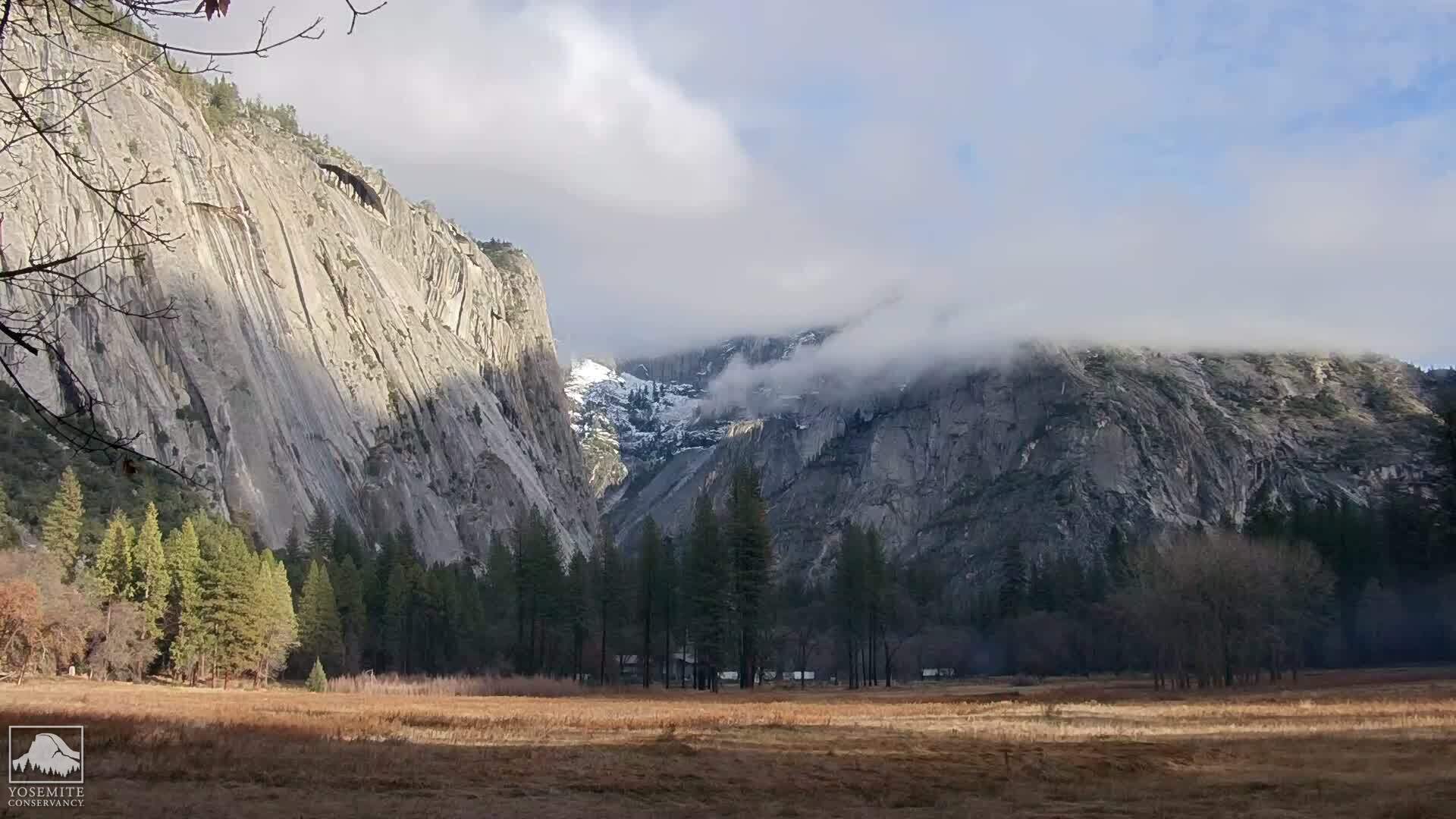
Webcam
Half DomeThis view of Yosemite Valley from just east of Yosemite Village gives a sense of conditions of the floor of Yosemite Valley. This webcam image is provided courtesy of Yosemite Conservancy. Additional Information: You can provide for Yosemite’s future—and support this webcam—by making a gift to Yosemite Conservancy. View Webcam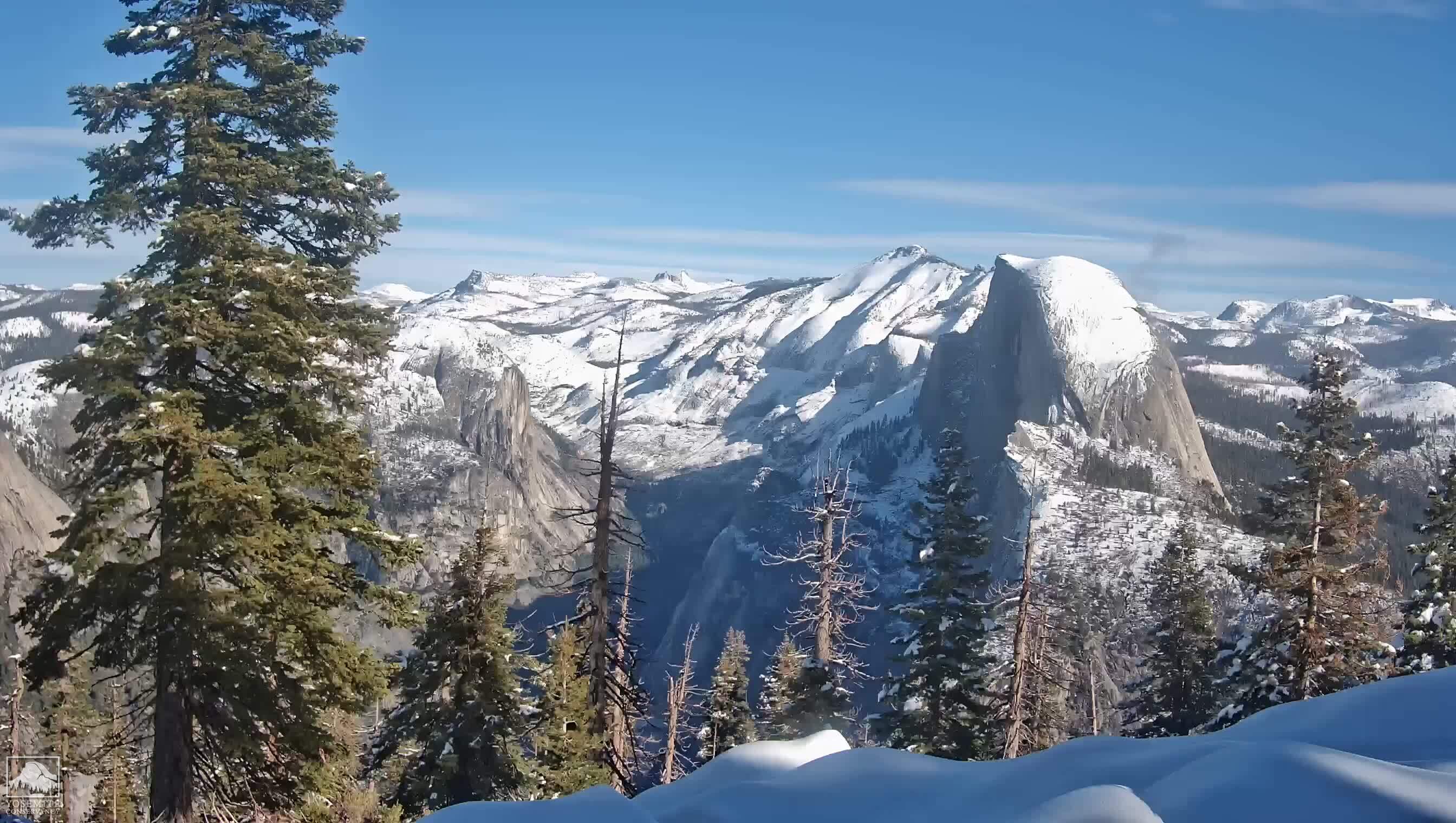
Webcam
Yosemite High SierraThis webcam, located at about 8,000 feet in elevation, shows Half Dome and the surrounding high country. This webcam image is provided courtesy of Yosemite Conservancy. Additional Information: You can provide for Yosemite’s future—and support this webcam—by making a gift to Yosemite Conservancy. View Webcam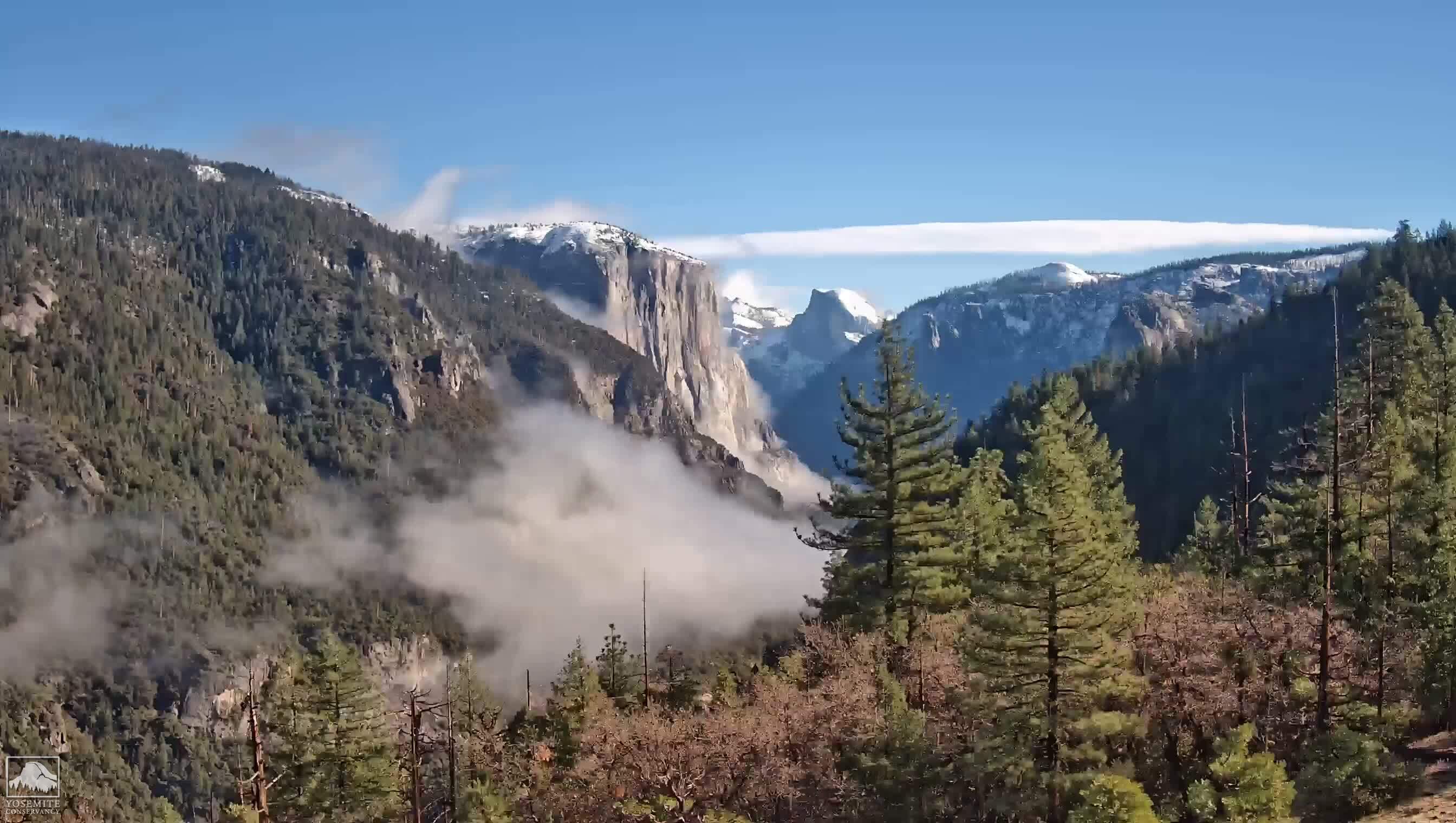
Webcam
El CapitanLocated on a dome near the Wawona Tunnel, this webcam provides a nice view of Yosemite Valley. This webcam image is provided courtesy of Yosemite Conservancy. Additional Information: You can provide for Yosemite’s future—and support this webcam—by making a gift to Yosemite Conservancy. View Webcam
Webcam
Turtleback Dome & Air QualityThis air quality camera shows the view to the west from near Yosemite Valley and also displays current air quality and weather data. View WebcamCampgrounds and CampfiresYosemite has 13 campgrounds, each with many campsites, and therefore, many campfires. Emissions from many simultaneous campfires can degrade air quality on a local scale. This is especially true in the nighttime and early morning hours, when inversions trap and concentrate fine particles from those campfires near the ground, creating local conditions that are potentially unhealthy for sensitive individuals. Campfires are generally allowed in all open campgrounds when fire restrictions are not in effect. However, from May through September, wood fires in Yosemite Valley and Hodgdon Meadow are only allowed between 5 pm and 10 pm (fires must be completely extinguished by 10 pm). Fires are allowed at any time from October through April. Campground Fire PreventionEach year campfires, smoking, and human carelessness cause unwanted fires in Yosemite. You can help prevent these fires by following a few fire safety tips. Make sure to check with a Ranger if you are unsure. Charcoal Briquettes
Camping Stoves and Lanterns
Smoking
Campfires
Fireworks Are Illegal in Yosemite National ParkYosemite Observer Dashboard: Air QualityVisual, interactive information about current weather, stream flow, fires, and air quality conditions; all on one site! |
Last updated: June 9, 2026